 Daily Ancestor
The 1840 U.S. Census
The 1840 census, dated June 1, 1840, names Revolutionary War and other military pensioners with their ages, a rare chance to find an older relative by name.
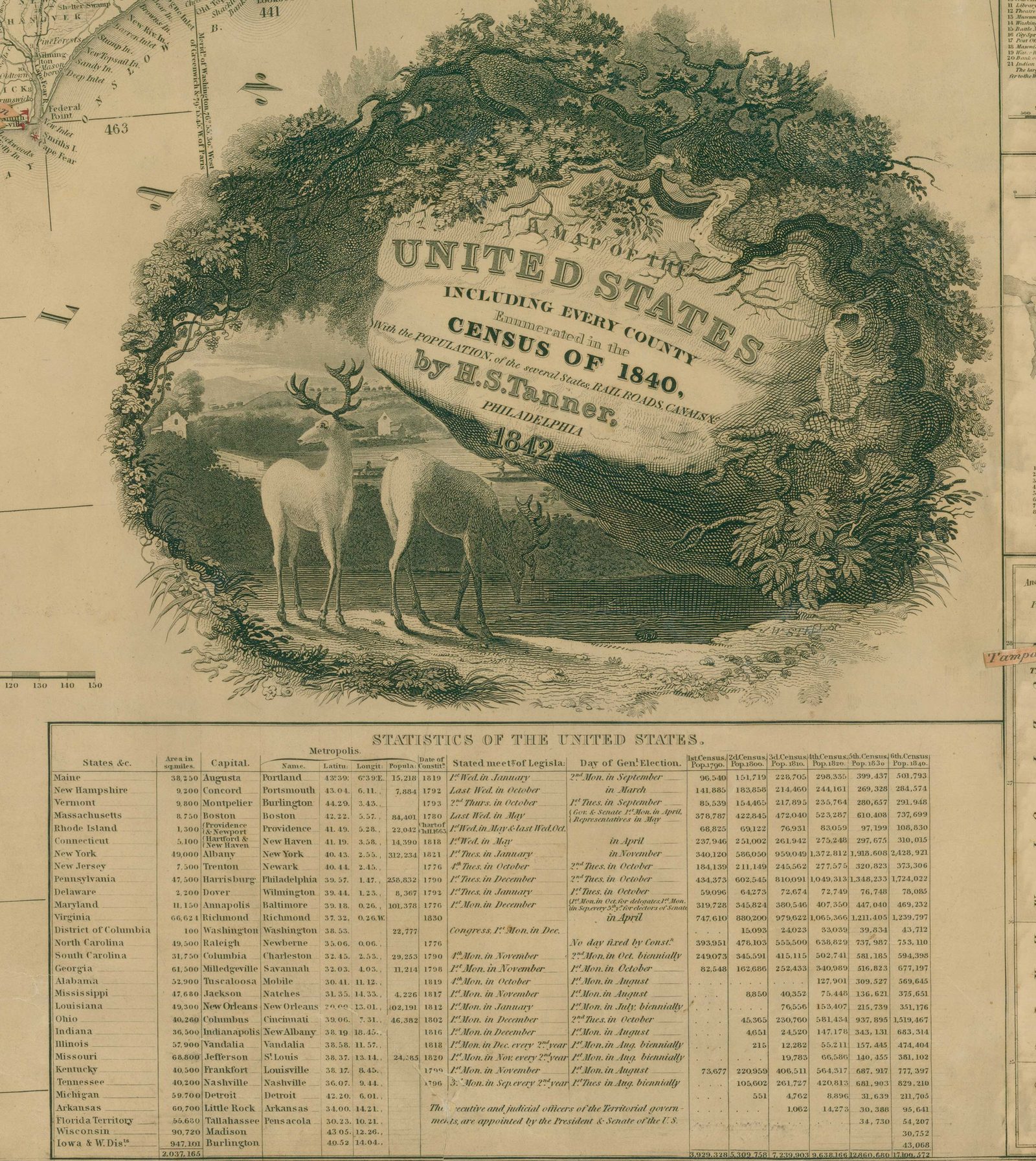
The sixth census began on Monday, June 1, 1840, under nearly the same rules as 1830. Only the head of household is named, and everyone else is counted in age groups.
The prize for family historians is the pensioner column. Anyone in the household drawing a pension for Revolutionary or other military service, whether a veteran or a widow, is listed by name and age.
The questions, column by column
| Name of head of family | The only regular name on the line. |
|---|---|
| Free white males and females, 13 age groups each | The same groups as 1830. |
| Free colored persons and slaves, by sex, six age groups | Ages in groups, with no names. |
| Persons employed in mining, agriculture, commerce, manufactures and trades, ocean navigation, inland navigation, and learned professions | Counts per household, a hint at the family's work. |
| Pensioners for Revolutionary or military services | Name and age. Leads to pension files, which can be rich in family detail. |
| Deaf and dumb, blind, and insane | Counts only, split for white and colored persons. |
| Schools and literacy | Counts of colleges, academies, and common schools and their students, plus the number of white persons over 20 in the family who could not read and write. |
New this census
- Names and ages of military pensioners.
- Seven groups of occupations.
- Counts of students and of adults who could not read and write.
Watch out for
- A pensioner is not always the head's own parent. In one National Archives example, a widow of 81 was living with her daughter's husband.
- The form is two facing pages. Make sure the right-hand page you read belongs to the same line as the name.
- No schedules survive for Clarendon County, South Carolina. Montgomery County, Maryland, was counted again starting June 1, 1841.
Other schedules
- No separate schedules about individuals. Agriculture and death schedules begin in 1850.
Where to see it
- Microfilm M704 (580 rolls). FamilySearch (free with an account) and Ancestry (free on computers at National Archives facilities) both index it and show the images.