All lessons
Handwriting · 1800‑1870

Lowercase e, c and r in 19th-century hands

Capital letters get the attention, but small letters cause most of the slow reading. In a fast 19th-century hand the e is a tiny loop, the c is the same tiny shape without the loop, and the r can look like an i, a v, or half of a u. Put them together in words like "executor" or "centurie" and the eye gives up.

The trick is to know the usual shapes and then let the word help. Below are real words from wills of 1806 and 1812 and an 1860 census page. For each, look first at the small letters, then read the whole word.
Letter by letter

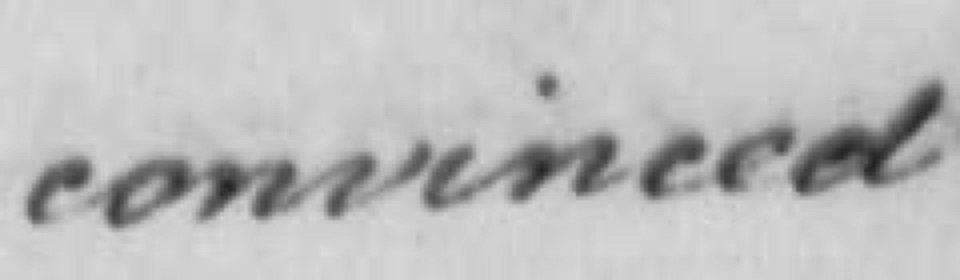
Handwritten word convinced from an 1806 will, with a small c and e side by side
c and e In "convinced" both letters sit next to each other (n, c, e, d). The c is a small hook that stays open on the right. The e has a tiny closed loop at the top. When you cannot see the loop, the letter could be either one.George Wythe, Public domain
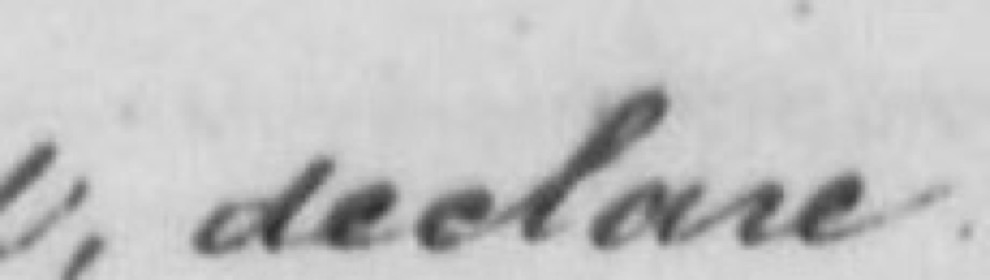
Handwritten word declare from an 1806 will
r and e Look at the end of "declare". Wythe's r is a short stroke with a small dip at the top, and the final e is a little loop, so "re" can be misread as "ie" or "ue". The c before the l is a hook with no loop.George Wythe, Public domain
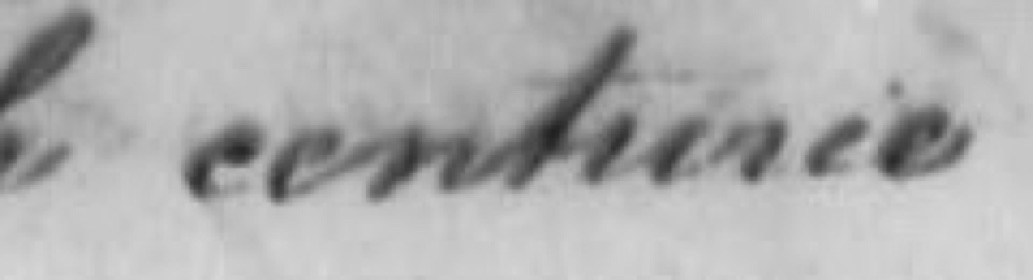
Handwritten word centurie from an 1806 will
r "centurie" is Wythe's spelling of century. After the u comes his r, which looks like a short i without a dot. Many readers see "centuiie". If a word has two i's in a row, suspect an r.George Wythe, Public domain
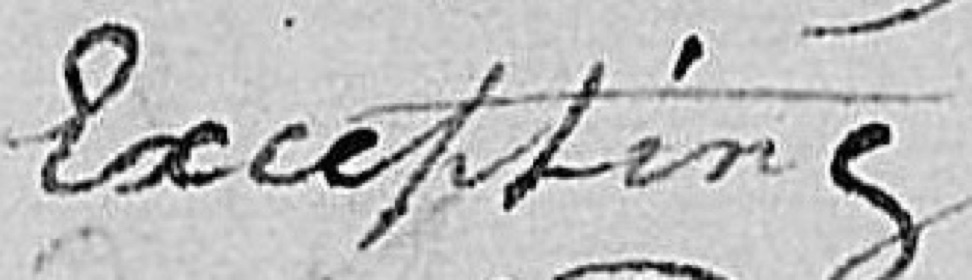
Handwritten word Excepting from an 1812 North Carolina will
c and e In "Excepting" the writer made c and e back to back. The c is an open curve; the e is the same curve with a small loop closed at the top. Count the loops to tell them apart.Solomon Johnson; State Archives of North Carolina, Public domain
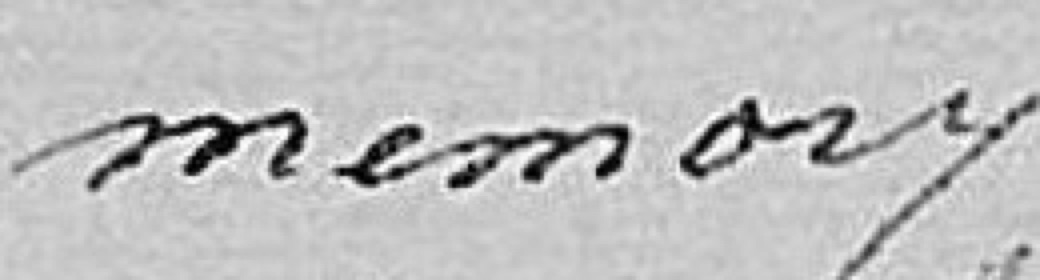
Handwritten word memory from an 1812 North Carolina will
r The r in "memory" is drawn with a sharp point at the top and a little shoulder, so it looks like a v. You will meet this pointed r often in plain, everyday hands of the early 1800s.Solomon Johnson; State Archives of North Carolina, Public domain
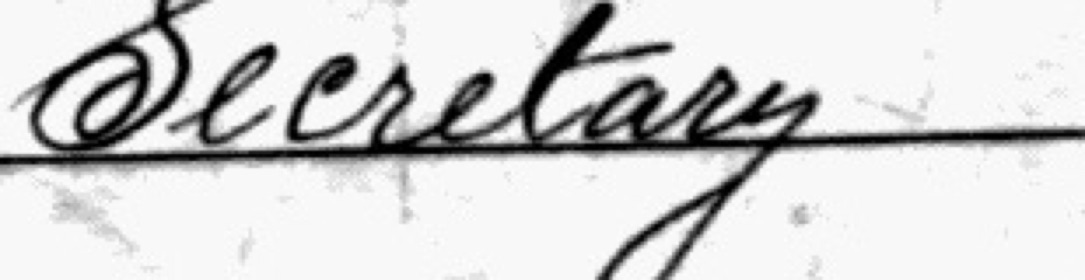
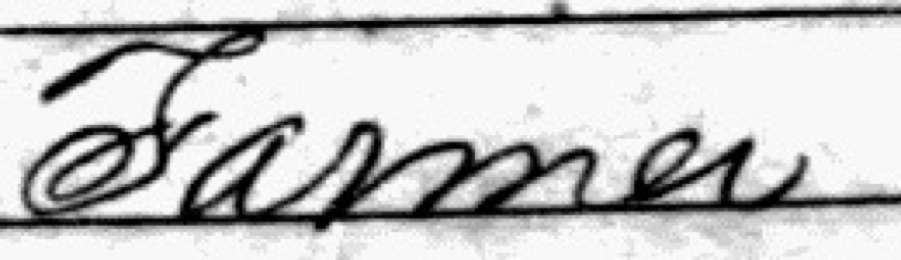
Census occupation Secretary written in an 1860 copybook hand
e, c and r A careful census hand: "Secretary". The e is a narrow loop, the c is an open hook just after it, and each r has a small notch at the top. Compare this neat r with the rough one in memory above.U.S. Census Office, assistant marshal; National Archives microfilm, Public domain
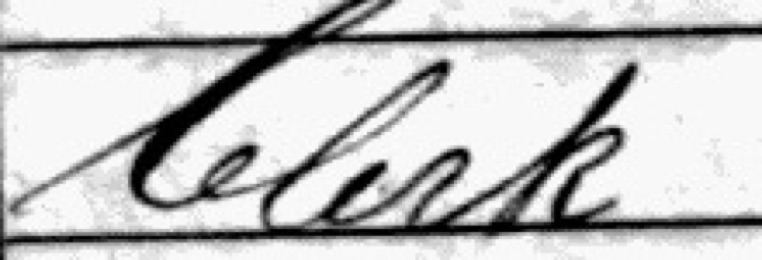
Census occupation Clerk where the e and r run together
e and r In a fast hand "Clerk" shrinks to a capital C, an l, and a run of humps. The e and r melt into what looks like a u. Read it from the pieces you are sure of: C, l, k.U.S. Census Office, assistant marshal; National Archives microfilm, Public domain
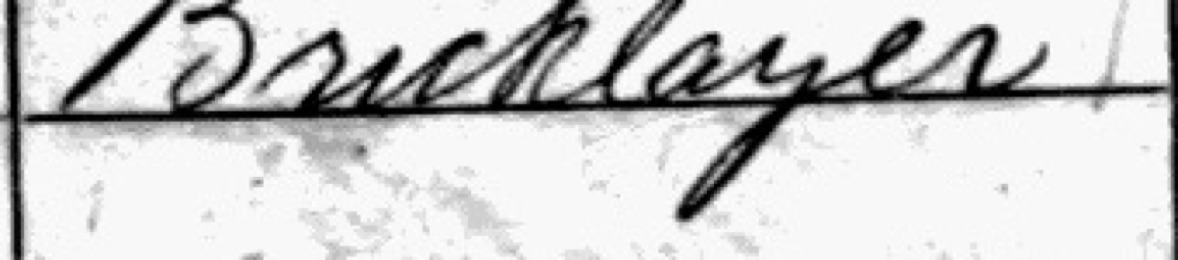
Census occupation Bricklayer
r Two r's in one word. After the B the r looks like half of a u, and the final "er" looks like a w lying on its side. The job column helps: Bricklayer is a common trade.U.S. Census Office, assistant marshal; National Archives microfilm, Public domain

Now you read it

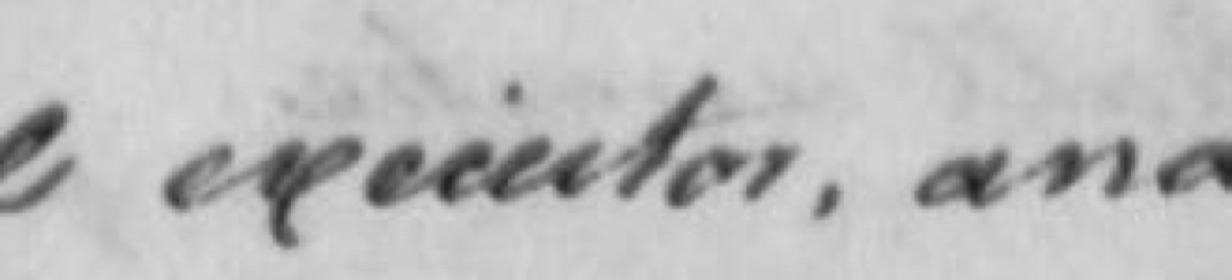
Handwritten word beginning with e, x, e, c and ending with a curled r
Wythe names "William Duval ___". What is the word?
Tips
  • e has a loop, c does not. If you cannot see the loop, try both letters.
  • Two i's in a row with no dots are often an r and an i, or an r alone.
  • The ending "er" often looks like a w, a u or a v. Read it as er first.
  • Learn one writer at a time: find a word you are sure of on the page and copy his e, c and r from it.
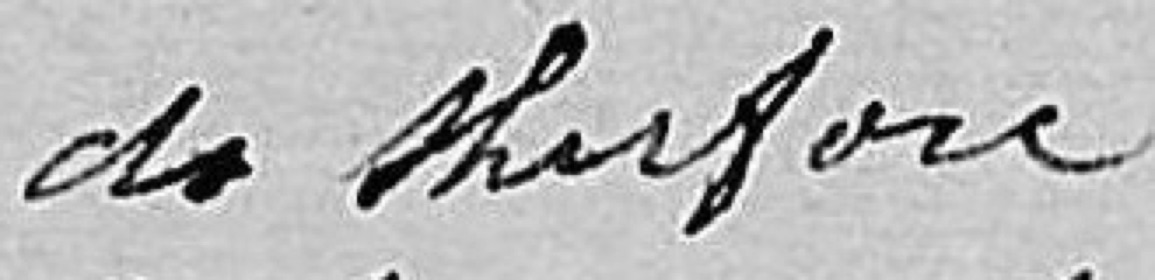
  • Old spellings are normal: "therfore", "centurie" and "probablie" are not mistakes to correct in your notes, so transcribe them as written.
Next lesson