All lessons
Handwriting · 1730‑1880

Numbers: 1 and 7, 4 and 9, and old dates

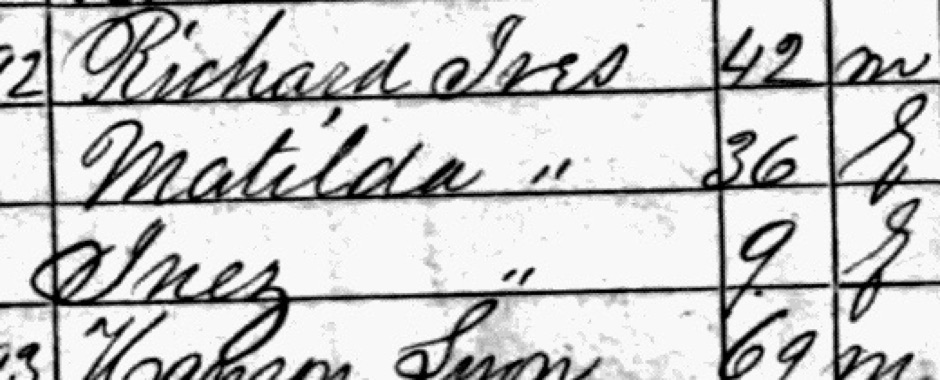
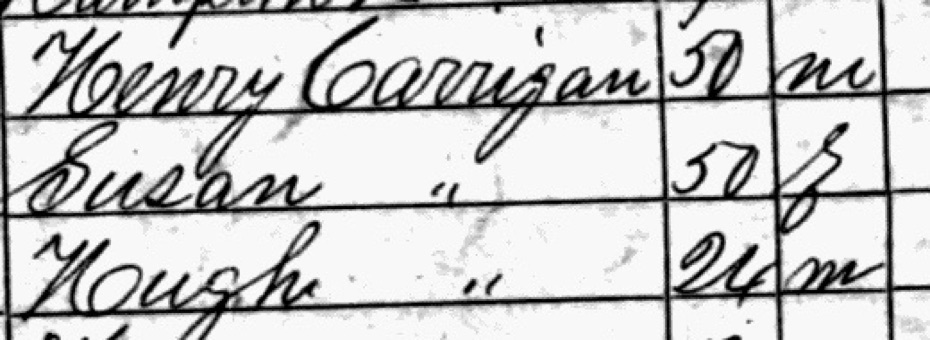
A wrong digit can send you looking for an ancestor in the wrong decade. In 19th-century hands the 7 often hangs below the line like a y, the 9 looks like a g, the 4 opens at the top like a u, and the 1 is a bare slash. Ages of babies appear as fractions, and dates before 1752 can carry two years at once.

This lesson shows real numbers from census pages, a family Bible and a gravestone. For each one, compare the digit with others in the same column: the same writer usually made each number the same way every time.
Letter by letter

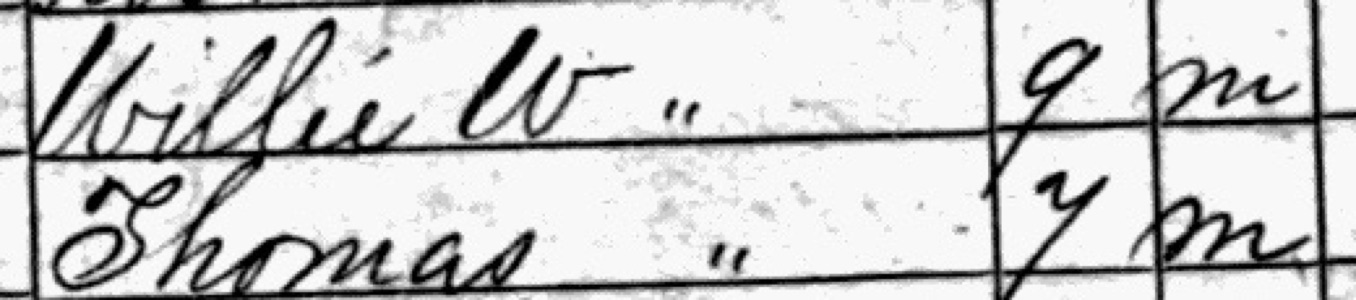
Two census lines: Willie W. aged 9 and Thomas aged 7, ages in a narrow column
9 and 7 Willie is 9 and Thomas is 7. The 9 has a closed loop on top and a tail straight down, like a g. The 7 has a short flat top and a long stroke that drops well below the line, like a y. Neither looks like a modern printed number.U.S. Census Office, assistant marshal; National Archives microfilm, Public domain
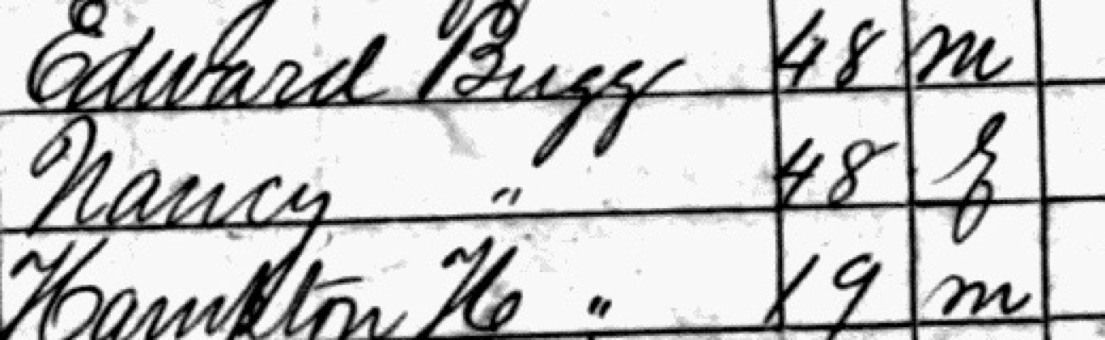
Three census lines with ages 48, 48 and 19
4, 8, 1 and 9 Edward and Nancy are both 48 and Hampton is 19. The 4 is an open shape like a check mark crossed by a short line. The 1 is a single slanted stroke with no foot, and the 9 again looks like a g.U.S. Census Office, assistant marshal; National Archives microfilm, Public domain
Two census lines: George W Tyler aged 12 and a baby aged 3/12
Fractions for babies The child on the second line is 3/12, which means 3 months old. Census takers in 1850 to 1880 were told to give the age of a baby under one year as months over 12. It is not a date and not "3 or 12".U.S. Census Office, assistant marshal; National Archives microfilm, Public domain
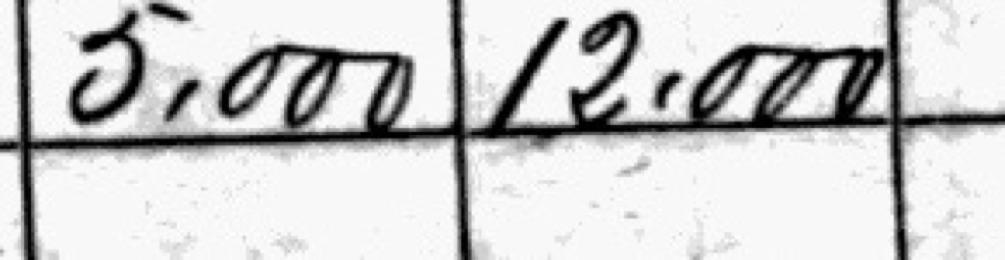
Census value columns reading 5,000 and 12,000
Commas that look like periods Real estate 5,000 and personal estate 12,000 dollars. The comma is a tiny dot or tick, so 5,000 can look like 5.000 or 5 dollars. In value columns read the whole group of digits.U.S. Census Office, assistant marshal; National Archives microfilm, Public domain
Family Bible entry: James Alen Barnes was born 17th March 1852
17th and 1852 The day is 17 with a small raised "th" after it. The year is 1852: the 8 leans and the final 2 has a flat base with a hook, so it is easy to read as 1858 or a z. The 7 in 17 again drops below the line.Barnes family; Indiana State Library via DPLA, Public domain
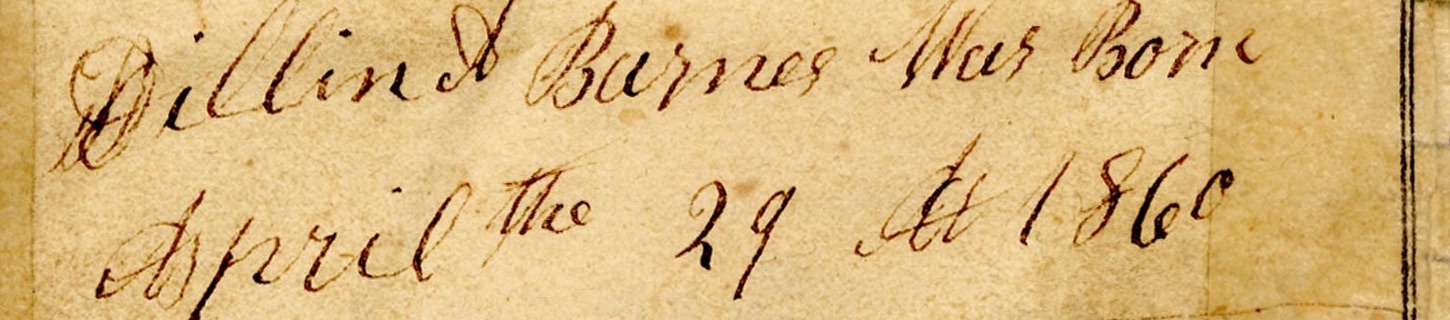
Family Bible entry: Dillin A Barnes was born April the 29, 1860
29 and 1860 In "April the 29" the 9 has a small head and a long tail that dips below the line, so 29 can be misread as 2g or 27. Compare the 6 in 1860, whose loop is at the bottom.Barnes family; Indiana State Library via DPLA, Public domain
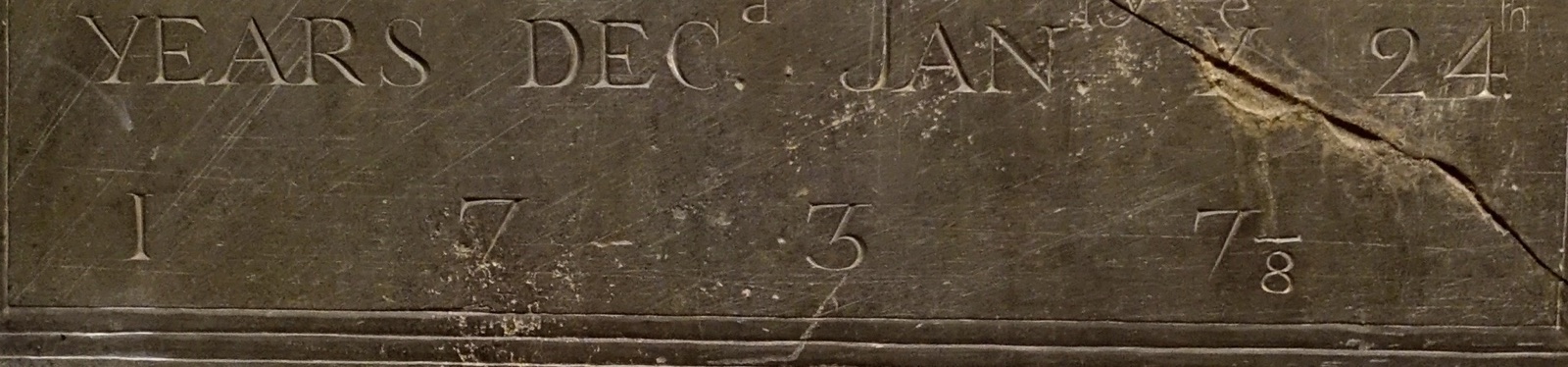
Slate gravestone lines: YEARS DECd JANry ye 24th, 1737 over 8
Double date 1737/8 John Lane died on January 24 in the year cut as 1737 with a small 8 under the last 7. Before 1752 the English year began on March 25, so January to March dates were often written with both years: 1737 by the old reckoning, 1738 by the new. Use 1738 as the modern year.Photo: Daderot (Wikimedia Commons), CC0

Now you read it

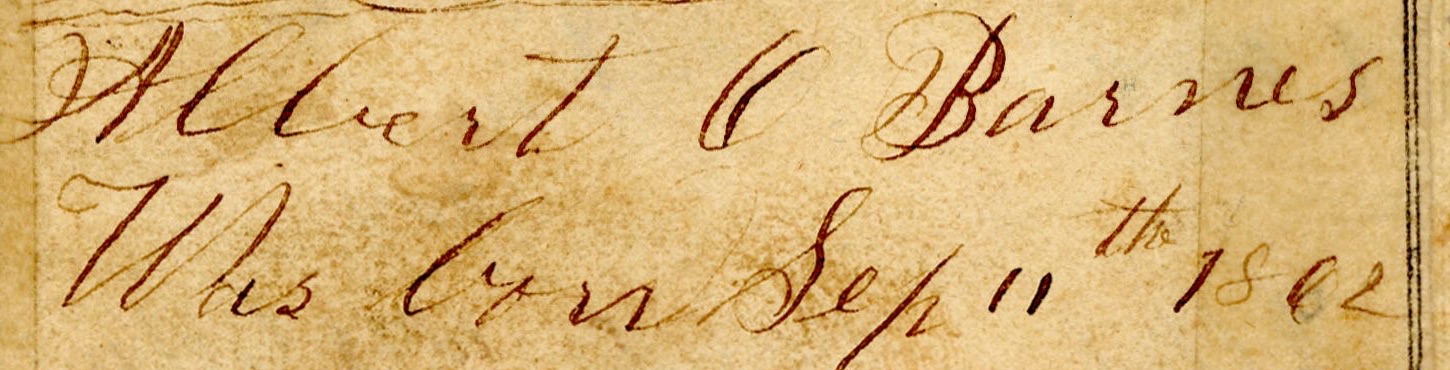
Family Bible entry: Albert C Barnes was born, with a month, a day with raised th, and a year
When was Albert born?
Tips
  • Find a number you are sure of on the same page (a page number, a printed year, an age that matches other records) and use it as your key for that writer.
  • A 7 that hangs below the line is still a 7. A 9 often looks like a g, and a 4 like a u.
  • Ages like 3/12 or 10/30 are months or days for babies, not dates.
  • A date between January 1 and March 24 before 1752 may show two years, like 1737/8. Record both, and use the second as the modern year.
  • Check the arithmetic: an age should fit the birth year in other records, give or take a year.
Next lesson