All lessons
Handwriting · 1900‑1920

Palmer method basics

Around 1900 American schools and business colleges began to drop the shaded, looped Spencerian hand for something quicker. Austin Norman Palmer's Palmer Method of Business Writing taught a plain, unshaded script written with the whole arm instead of the fingers. By the 1910s and 1920s it was the main school hand, so younger clerks, enumerators and people signing draft cards often wrote this way.

Palmer writing is usually easier to read than older hands: even pen pressure, few flourishes, simple small letters. But the capitals were cut down to a few quick strokes, and some of them now look like numbers or like other capitals. Learn the model shapes first, then see the same habits in a real 1920 census page.
Letter by letter

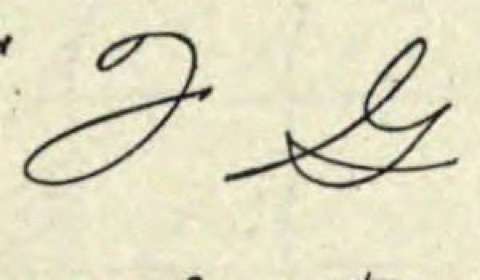
Palmer method model capitals F and G
F and G The Palmer F is a wave across the top and a stem that curves left at the bottom, with a small tick across the middle of the stem. Without the tick it would be a T, and at a glance it can pass for a J or a 7. The G is a tall loop with a flat stroke running along the line.A. N. Palmer, The Palmer Method of Business Writing (1915 edition), page 29, Public domain
Palmer method model capitals I and J
I and J Both start with the same upward loop. The I stops on the line and ends in a stroke back to the left; the J keeps going below the line into a long lower loop. Look for the part below the line.A. N. Palmer, The Palmer Method of Business Writing (1915 edition), page 29, Public domain
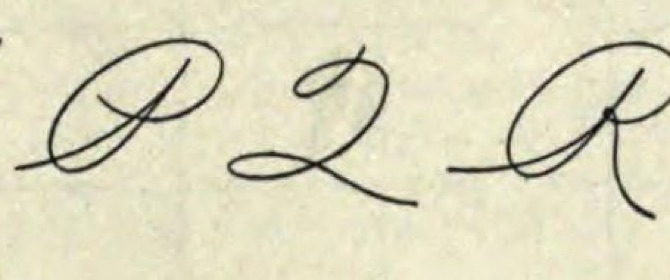
Palmer method model capitals P, Q and R
P, Q and R The Q is the trap: it looks exactly like a handwritten number 2. P and R start the same way, an oval on top of a stem; only the R adds a leg that kicks out to the right.A. N. Palmer, The Palmer Method of Business Writing (1915 edition), page 29, Public domain
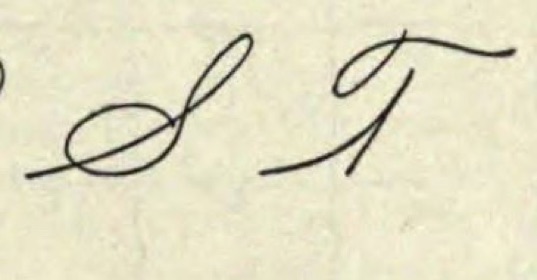
Palmer method model capitals S and T
S and T The S is a loop on the line, like an L turned around. The T has its bar as a separate wave on top and a stem that looks like the number 1 or 7. Compare it with the F above: only the F has the small tick across the middle of the stem.A. N. Palmer, The Palmer Method of Business Writing (1915 edition), page 29, Public domain
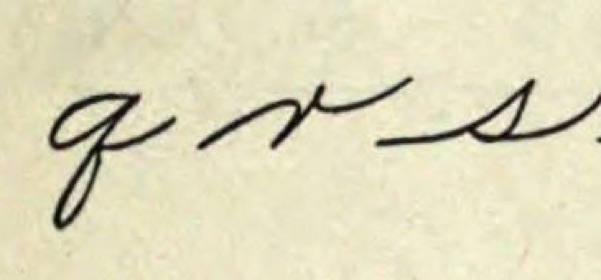
Palmer method model small letters q, r and s
Small q, r and s The small r has a little shoulder on top, so it can look like a v or an n with one hump. The small s is a narrow point that closes on the line. The q goes below the line with a loop that turns right.A. N. Palmer, The Palmer Method of Business Writing (1915 edition), page 29, Public domain
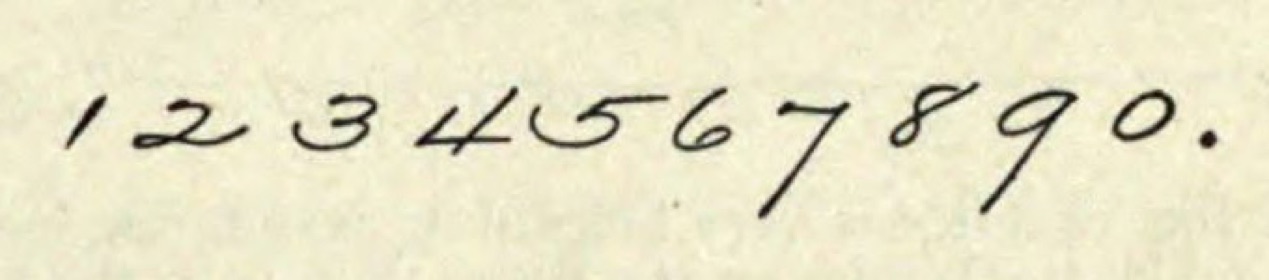
Palmer method model figures 1 to 9 and 0
Figures Palmer figures are small and plain. The 7 and 9 go below the line, the 4 is made with two separate strokes, and the 1 is a single slanted stroke. Knowing this helps with ages and dates in 20th century records.A. N. Palmer, The Palmer Method of Business Writing (1915 edition), page 29, Public domain
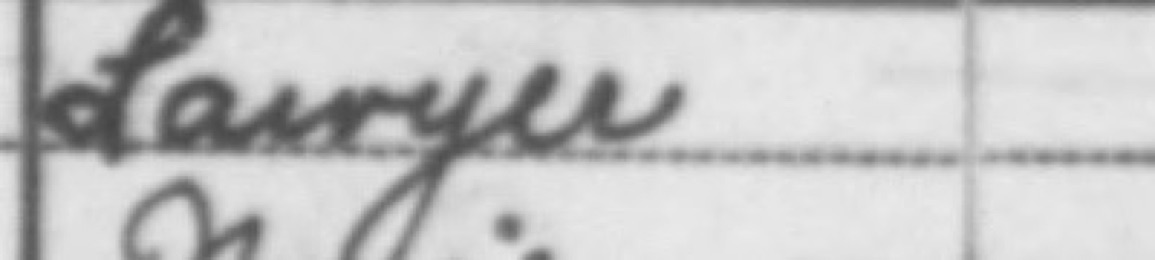
Census cells reading Blacksmith, Blacksmith and Carriage Shop, and None below
A real 1920 hand: Blacksmith On this census page the writing is plain and unshaded, in the business style Palmer pushed into schools. The capital B is two humps on a stem and both words read Blacksmith; the second column gives the business, Blacksmith and Carriage Shop.U.S. Bureau of the Census; National Archives, via Digital Public Library of America, Public domain
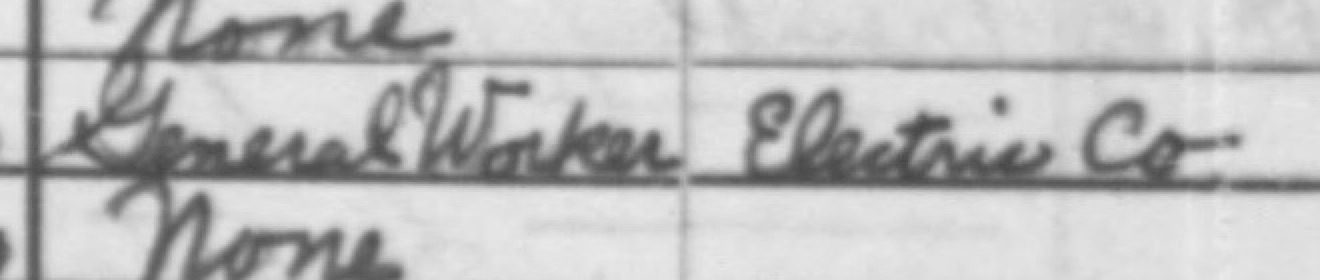
Census cells reading General Worker and Electric Co., with None above and below
G and W in a real hand The G of General is a tall loop with a flat foot, just like the model. The W of Worker is made with quick open strokes. Electric Co. in the next column names the employer.U.S. Bureau of the Census; National Archives, via Digital Public Library of America, Public domain

Now you read it

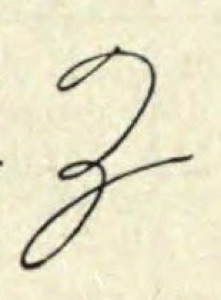
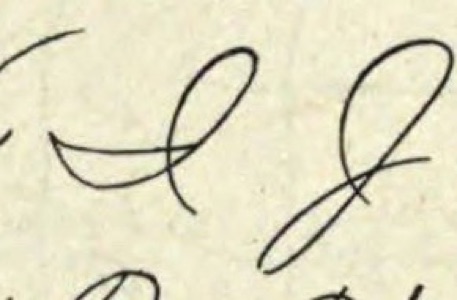
A single Palmer method model capital
Which capital letter is this?
Tips
  • Palmer writing has no thick and thin strokes, so a darker spot usually just means the pen was dipped again, not a different letter.
  • When a capital looks like a number (Q like 2, Z like 3, T like 7), check whether a number makes sense in that column.
  • Look for the part below the line: J, Y, Z and the small f, g, j, q, y reach down; I, S, L and G do not.
  • Writers trained before 1900 kept Spencerian habits, so expect a mix of both styles in records from 1900 to 1920.
  • Use the column heading or printed words on a form to decide what kind of word you are reading.
Next lesson