All lessons
Handwriting · 1780‑1880

Superscript abbreviations: Jno, Wm, Sam'l, yr

Old American records are full of short words with a tiny letter floating above them: Wm, Jno, Saml, Recd, Genl. This is not sloppy writing. It was the standard way to abbreviate, taught in schools and used by clerks, merchants and officers from colonial days until about 1880. The raised letter is usually the LAST letter (or last two) of the full word, and a dot, a dash or two small marks under it often say "this word is shortened".

The trick is to read the beginning and the end, then fill in the middle. Wm is W...m, so William. Jno is J, n, o, the old short form of John (it comes from the Latin Johannes), and it never means Jonathan. Once you know a dozen common ones, a whole page of names, dates and money suddenly opens up. The examples below all come from real receipts, notes and letters written between 1779 and 1865.

Letter by letter

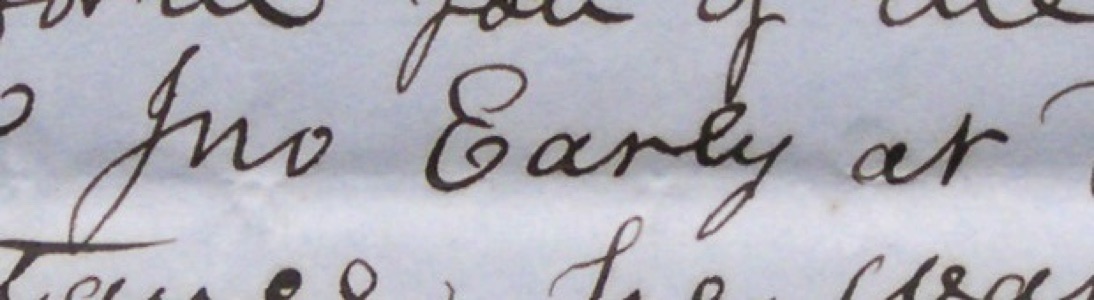
Handwritten words Jno Early at, from an 1851 letter
Jno = John The J has a long tail below the line, followed by a small n and o. Jno always means John, not Jonathan. Jonathan was shortened Jona. or Jonan.John Willey; Missouri Historical Society (Missouri History Museum), via DPLA, Public domain
Handwritten words To Wm Cary on a blacksmith's bill
Wm = William A capital W with a small m tucked against it: Wm is William. The m is not raised here, which is also common: the short form alone tells you the word is cut.William Cary; Missouri Historical Society (Missouri History Museum), via DPLA, Public domain
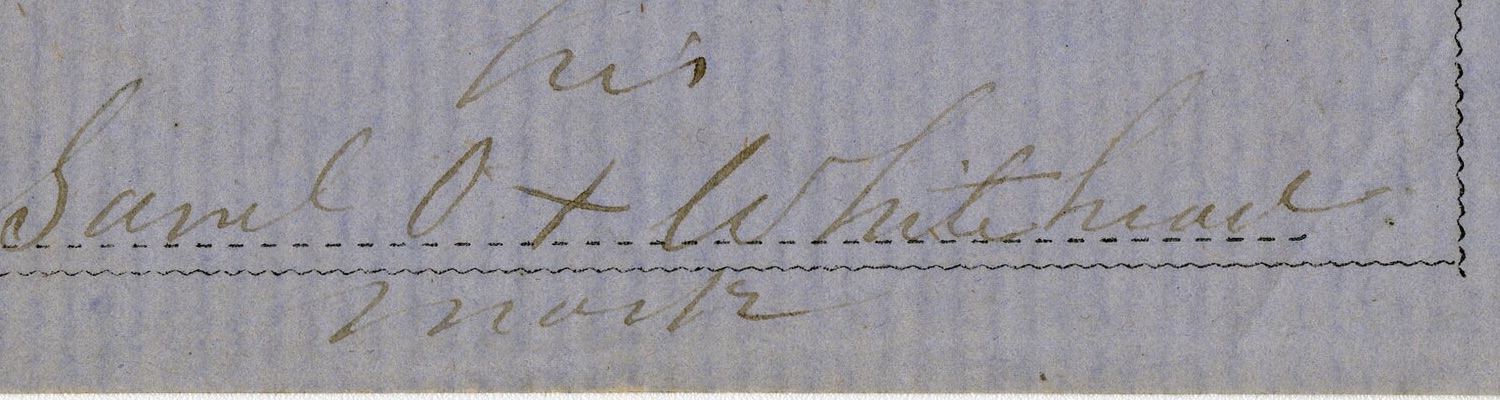
Signature line Saml his mark Whitehead on an 1862 promissory note
Saml = Samuel Saml is S, a, m and a raised l, often written Sam'l in print. Here the name is written by someone else around Samuel Whitehead's mark (the small cross), with "his" above and "mark" below.Samuel Whitehead; Missouri Historical Society (Missouri History Museum), via DPLA, Public domain
Handwritten heading Genl William Clarke with large flourishes
Genl = General Gen with a raised l and a small dot after it. Military titles were almost always shortened: Genl, Col, Capt, Lieut, Serjt.Patrick Cunningham; Missouri Historical Society (Missouri History Museum), via DPLA, Public domain
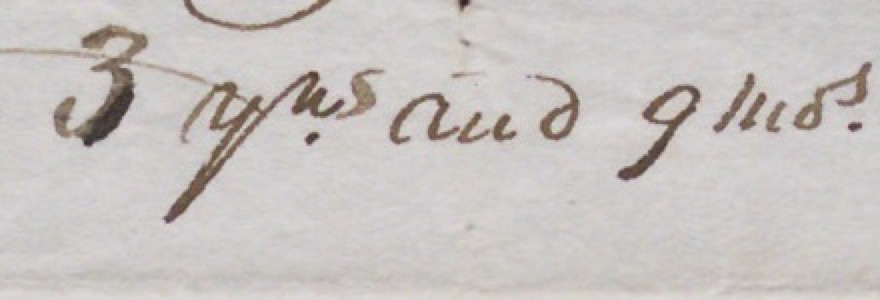
Handwritten 3 yrs and 9 mos with raised letters
yrs and mos = years and months Look for the raised rs after y and the raised s after mo, each with a dot below. The writer is counting 3 years and 9 months of wages.Patrick Cunningham; Missouri Historical Society (Missouri History Museum), via DPLA, Public domain
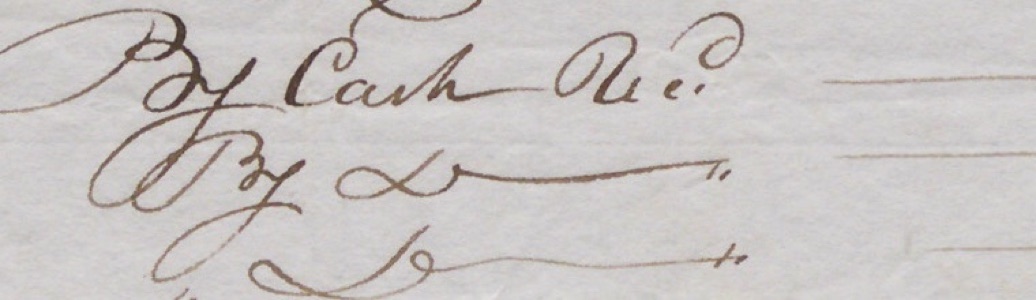
Handwritten line Recd May the 18th 1780
Recd = received, 18th Rec with a raised d, then the date: 18 with a raised th. Recd starts thousands of receipts, and raised th, st, nd and rd are normal on dates.John Bowden; Missouri Historical Society (Missouri History Museum), via DPLA, Public domain
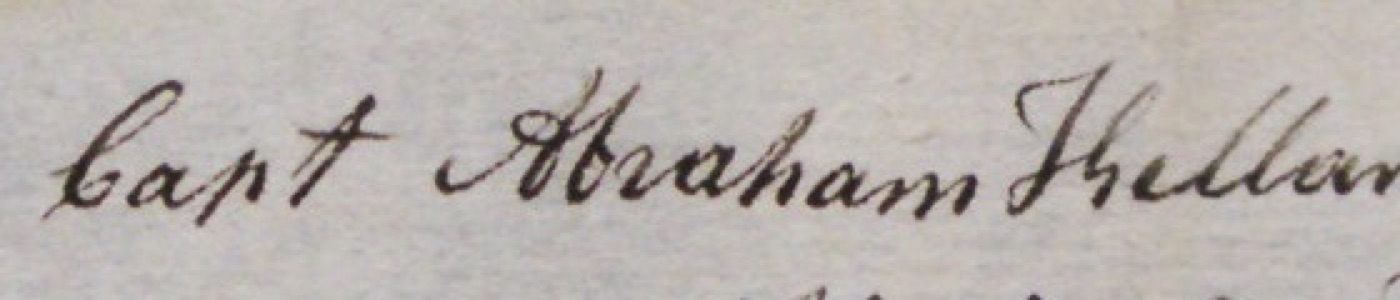
Handwritten words Capt Abraham Kellar
Capt = Captain Not every abbreviation is raised. Here Capt sits on the line. Ranks, months (Jany, Feby, Septr) and titles (Mr, Esqr, Revd) are the words most often cut short.Christy McGinnis; Missouri Historical Society (Missouri History Museum), via DPLA, Public domain

Now you read it

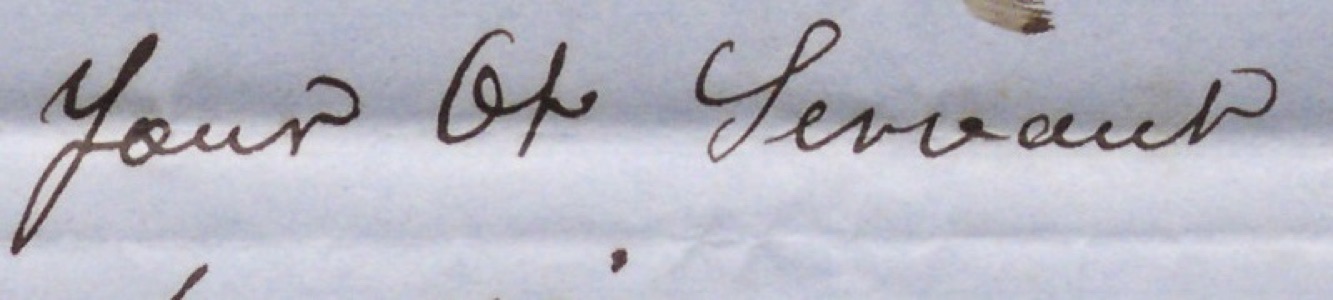
Closing of a letter: Your Obt Servant
Letters often closed this way. What does the middle word stand for?
Tips
  • Read the first letters and the raised letters, then guess the middle: W...m is William, Jas is James, Chas is Charles, Thos is Thomas, Benj is Benjamin.
  • Jno is John, never Jonathan. Jona or Jonan is Jonathan.
  • Two dots, a dot or a short dash under the raised letter is the clerk's way of saying "shortened word". It is not part of the name.
  • Raised st, nd, rd and th on dates are ordinal endings: 21st, 2nd, 3rd, 18th.
  • When you index or transcribe, copy the abbreviation as written (Wm) and put your expansion in brackets: Wm [William].
  • Do and " both mean ditto, the same as the line above.
Next lesson